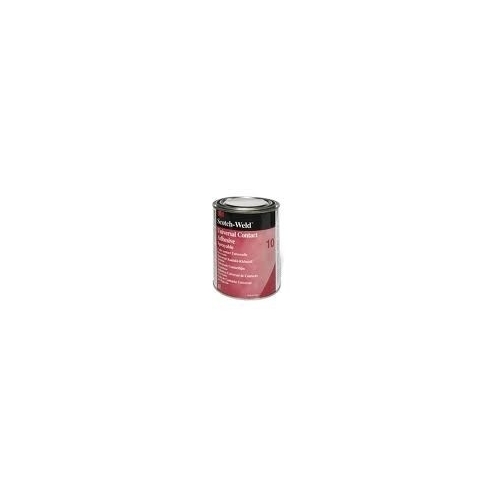







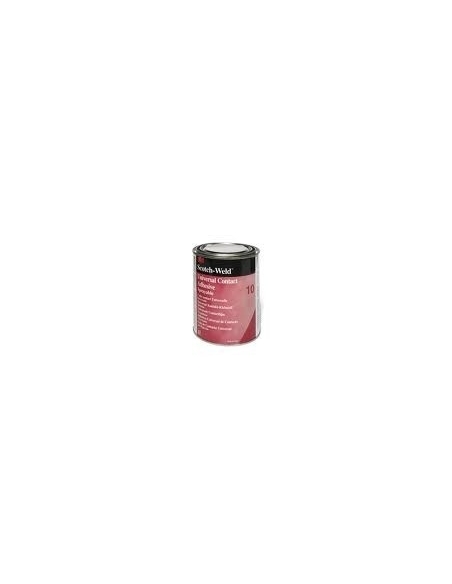


3M™ Scotch-Weld™ 10 Universal Contact Adhesive
3M™ Scotch-Weld™ Universal Contact Adhesive 10
- Scotch-Weld™ Universal Contact Adhesive10 is a liquid, air-drying adhesive, which bonds immediately and permanently upon application of contact pressure.
- There is no need for clamping or fixing
- Yellow in colour
- Neoprene base
- Units per 1tin
Please refer to product data sheet for further information
Scotch-Weld Contact Cement 10 is a liquid, airdrying, adhesive which bonds immediately and permanently upon application of contact pressure.
There is no need for clamping or fixturing.
Surface Preparation: For best results, all surfaces to be bonded should be smooth and dry. As your bond will be no better than the surface to which it adheres, dirt, dust, oil, loose paint, wax, grease, etc should be removed. Aluminium, steel and copper should always be wiped with solvent before the adhesive is applied. Solvent wipe the surface with a clean cloth or tissue until there is no further transfer of dirt or smut.
Application: Stir well before using. Working temperature : the adhesive and both surfaces should be 18°C or above at the time of bonding. Apply Scotch-Grip Contact Cement 10 to both surfaces. Apply with a fibre or animal hair brush, or pour it and spread with a scraper. Two coats on porous surfaces are recommended. Only one generous coat on nonporous surfaces is required. Cement must be completely dry between coats. Aluminium, steel, hardwoods, tempered hardboard and decorative laminates are non-porous. Soft woods, untempered hardboard, plywood and plaster are typical of the porous surfaces which require two brush coats. Some extremely porous surfaces, including many fibrous materials and masonry surfaces may require even more than two coats. The test for enough adhesive is a yellow shiny film when completely dry. Dull spots after drying indicate not enough adhesive; these spots must have another coat.
Let It Dry Completely Under normal temperature and humidity conditions (24°C and max 50% RH) Scotch-Grip Contact Cement 10 will dry in 10 minutes. You have up to one hour after the adhesive is dry in which to complete the bonding job. You can bond as soon as it is dry, but the longer you wait the stronger the initial bond will be. The test for dryness is to press a small piece of heavy kraft paper lightly against the dried adhesive. If no adhesive sticks to the paper, it is dry. If your two surfaces do not grab each other immediately when brought into contact, the adhesive has dried too long, you did not use enough or the relative humidity was above 50% causing a film of moisture to form on the adhesive surface.
Apply pressure Thoroughly Bonding is immediate upon contact. Sustained pressure is not required but pressure must be applied to every square inch of the surface. Apply pressure by using heavy body pressure on a small (not over 3") hand roller. Rolling pins and other wide rollers are not as good because they bridge low spots and distribute the pressure over too large an area.
Assembling Position the surfaces carefully before assembly. No adjustment is possible after the adhesive films make contact. Use the paper slip sheet method (or spacers) to position large pieces.
You might also like


Viewed products


Tap to zoom